By Kyembe Karim, Grade One Magistrate, Pallisa Chief Magistrates Court, Uganda
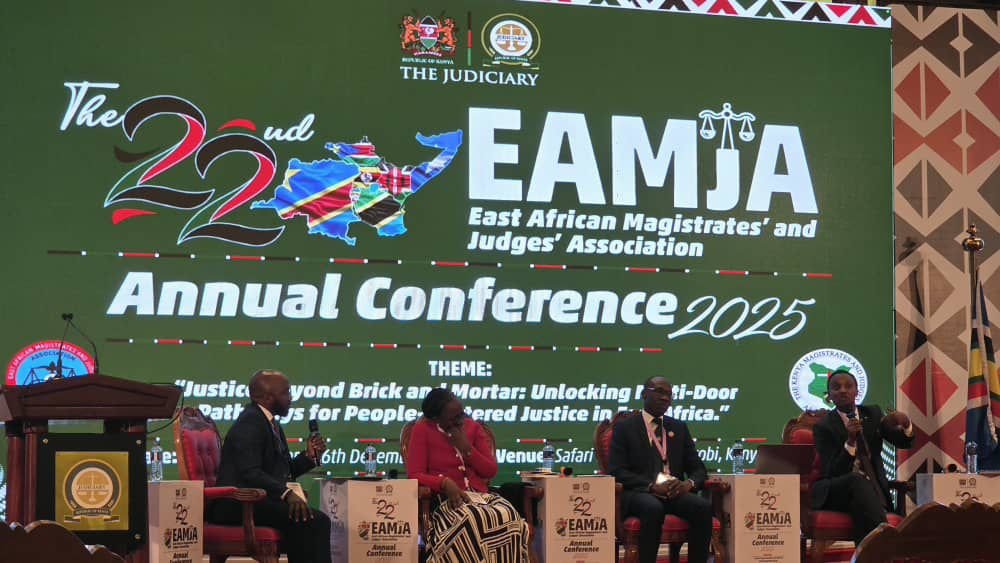
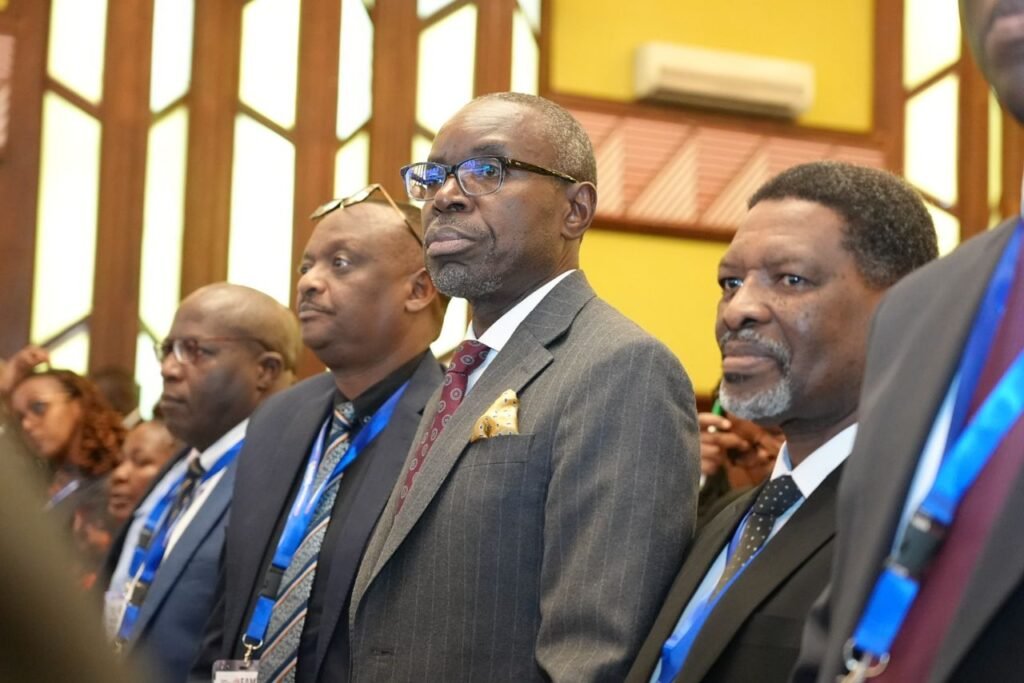
I have just returned from Nairobi where the 22nd Annual Conference of the East African Magistrates and Judges Association (EAMJA) concluded on 6 December 2025 at the Safari Park Hotel. Hosted by the Kenya Magistrates and Judges Association under the leadership of Chief Justice Martha Koome, the week-long gathering lived up to its powerful theme: “Justice Beyond Brick and Mortar – Unlocking Multi-Door Pathways to People-Centered Justice in East Africa.”
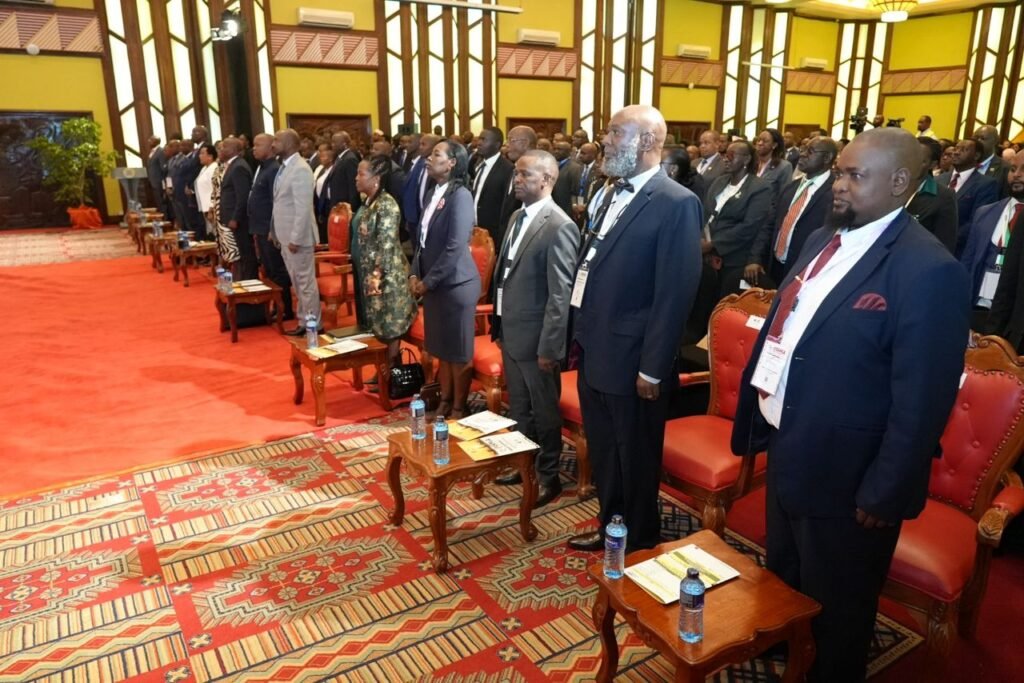
The conference was officially opened by Kenya’s Deputy President, Prof. Kithure Kindiki, who reminded us that “justice is no longer a national duty but a regional covenant” and that a functional justice system is the operating system of any thriving economy. He urged us to treat judicial systems not as barriers but as doorways – hence the multi-door approach.
Uganda fielded one of the largest delegations (approximately 95 participants led by Deputy Chief Justice Hon. Dr Flavian Zeija), and once again we stood out for both numbers and active participation. The Uganda Judicial Officers Association (UJOA), under its President, Hon. Lady Justice Olive Kazaarwe Mukwaya, ensured flawless logistics.
I was personally honored to moderate a highly engaging Socratic dialogue session titled “Balancing the Role of a Judge in a People-Centered Justice System”. The panel of four distinguished judicial officers from across the region — Hon. Lady Justice Olive (Uganda), Hon. Justice Alvin Mugeta (Tanzania), Hon. Justice John Byakatonda (Rwanda), and Hon. Justice Christine (Kenya) — explored, through rigorous questioning and candid exchange, how judges can remain impartial guardians of the law while actively promoting reconciliation, cultural relevance, and access to justice for the most marginalized.
What We Learned About ADR and AJS
The conference was rich with practical lessons on Alternative Dispute Resolution (ADR) and Alternative Justice Systems (AJS). A few highlights:
- Kenya pays accredited mediators US$200 for a successful mediation and US$150 even if it fails – rewarding effort while pushing for success.
- Rwanda automatically suggests mediation the moment a case is filed online.
- Several jurisdictions now impose a strict 30-day timeline for mediation to prevent its abuse as a delaying tactic.
- Many are moving away from calling it “Alternative” Dispute Resolution and now prefer “Appropriate” Dispute Resolution – a small but profound shift.
Two flagship programmes were repeatedly held up as models:
Kenya’s STAJ (Social Transformation through Access to Justice) Programme
A 10-year strategic blueprint (2023–2033) that treats the courthouse as a multi-door building: formal litigation, Court-Annexed Mediation (CAM), small claims courts, arbitration, and community-based AJS all working together to serve the people.
Rwanda’s Abunzi Mediation Committees
Locally elected “reconciler” committees that resolve most civil and minor criminal disputes within one month at village level, producing enforceable agreements and dramatically reducing court backlogs while healing communities.
Court-Annexed Mediation (CAM) – The Quiet Revolution
For those yet to experience it: CAM is mediation formally attached to the court process. A judge screens and refers suitable cases to accredited mediators; sessions are confidential and time-bound; successful agreements become consent judgments. Kenya, Tanzania, Rwanda, and increasingly Uganda are seeing remarkable results in backlog reduction and party satisfaction.

The Collective Way Forward
Before we left, delegates committed to:
- Institutionalizing AJS with dedicated structures and budgets in every judiciary.
- Enacting or strengthening national laws and policy frameworks for ADR/AJS.
- Appointing a focal person in each judiciary to coordinate and follow up regionally.
- Holding regular (at least annual) meetings of these focal persons to share best practices.
- Building clear pathways between formal courts and informal/community justice mechanisms.
A Memorable Closing
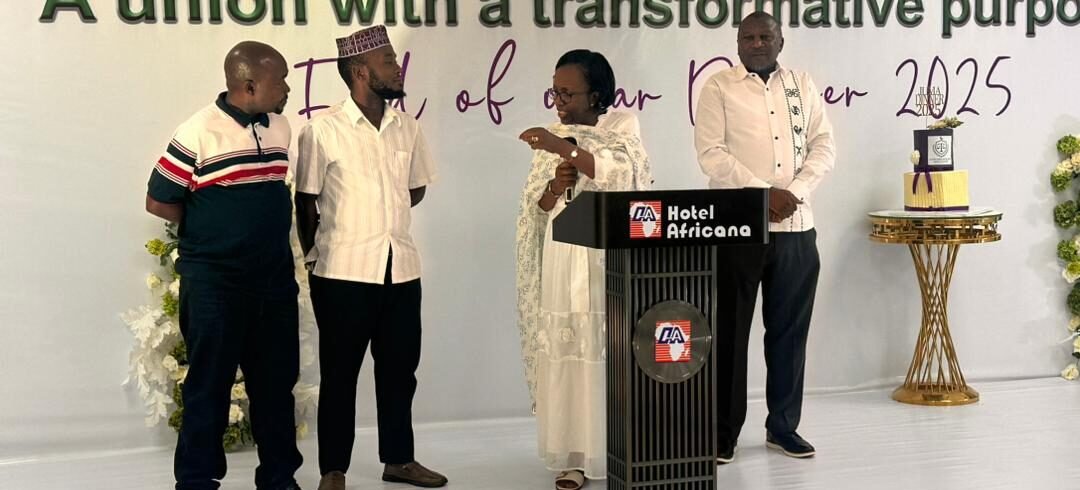
The conference ended with a gala dinner hosted by Chief Justice Koome (each delegate received Beacons of Judiciary Transformation by Emeritus CJ Willy Mutunga) and an unforgettable visit to the Olkaria Geothermal Power Plant in Naivasha – a powerful reminder that, just like geothermal energy, the real power for justice lies beneath our feet in the wisdom of our communities.
As a Grade One Magistrate from Pallisa, I returned home with fresh energy and practical ideas to implement back at my court. The future of justice in East Africa is not in taller court buildings – it is in opening many doors so every citizen can find the one that leads to fairness, reconciliation, and dignity.
The work starts now. Let us keep the conversation – and the mediation rooms – wide open.
HW Kyembe Karim
Grade One Magistrate
Pallisa Chief Magistrates Court
Republic of Uganda
December 2025